
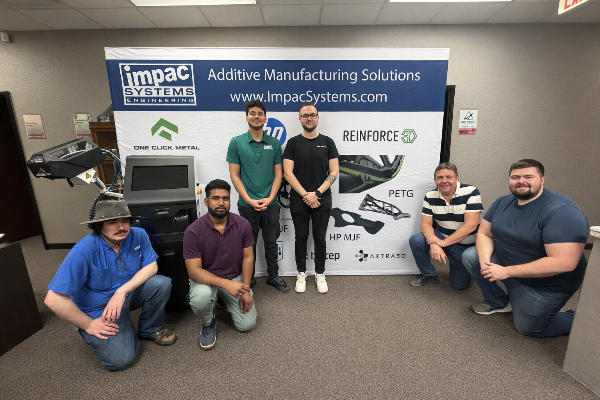
If you've been following Impac Systems Engineering lately, you've probably seen us talking quite a bit about Reinforce3Dand Continuous Fiber Injection Process (CFIP) technology.
There's a reason for that.
CFIP introduces a different way to think about strengthening manufactured parts. Instead of relying only on the material or manufacturing process to achieve the strength an application needs, CFIP adds continuous fiber reinforcement inside the part, placing strength where it's actually needed.
It's an exciting concept, but learning about a new manufacturing technology and figuring out whether it makes sense for your application are two very different things.
That's where Impac Systems Engineering comes into play.
So, What Exactly Is CFIP?
CFIP stands for Continuous Fiber Injection Process. Developed by Reinforce3D, it's a patented post-process that reinforces manufactured parts from the inside.
The process starts at the design stage, where internal channels are incorporated into the part. The base component can then be manufactured before being placed into the Reinforce3D DELTA system, where continuous fibers are injected through those internal paths under controlled parameters.
One of the things that makes this technology so interesting is that the reinforcement happens after the part has already been manufactured.
That means CFIP can work alongside existing manufacturing processes rather than requiring manufacturers to completely rethink how they're producing their parts. Reinforce3D describes CFIP as compatible with additive and molded workflows, as well as a range of engineering materials and reinforcement fibers.
Why Reinforce a Part From the Inside?
With additive manufacturing, there can sometimes be a gap between creating the geometry you want and achieving the mechanical performance you need.
A 3D printer might be able to produce an incredibly complex design, but if that component is going into a demanding application, strength, stiffness, weight, and durability become just as important as geometry.
CFIP gives engineers another option.
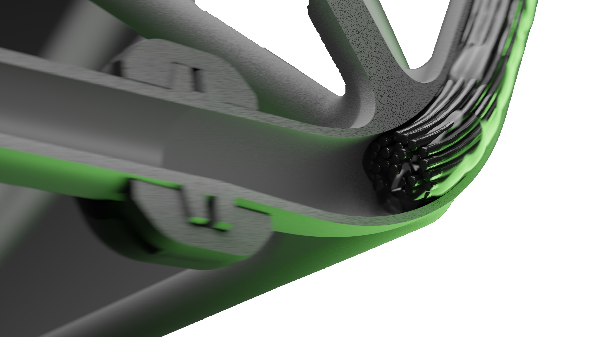
Rather than adding material everywhere or overbuilding a component just to strengthen a few critical areas, continuous fibers can be routed internally along specific load paths. This allows reinforcement to be placed strategically while maintaining the weight and design advantages that made additive manufacturing attractive in the first place.
For industries where every bit of weight matters, that's a pretty interesting combination.
It's About More Than Just Carbon Fiber
Carbon fiber might be the first thing that comes to mind when talking about CFIP, but the technology isn't limited to one reinforcement material.
Reinforce3D's system supports carbon, glass, aramid, and other fiber compositions, giving engineers additional flexibility depending on what they're trying to accomplish with a part.
The technology can also be used to reinforce and integrally join separately manufactured components. This creates some interesting possibilities for larger structures that may otherwise be limited by a printer's build volume.
Instead of asking, "Can my printer make this entire part?" manufacturers can start asking, "What's the best way to manufacture each section, and how can we reinforce the final structure?"
That's a very different way of approaching design for additive manufacturing.
Where Could CFIP Make Sense?
We're seeing some especially interesting possibilities anywhere manufacturers need to balance strength and weight.
That includes applications in:
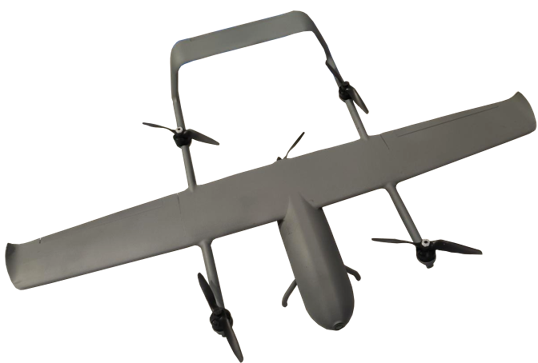
Aerospace and UAVs – Lightweighting is always important when something needs to fly. Strategic reinforcement can help engineers increase structural performance without unnecessarily adding material.
Automotive and mobility – CFIP opens another option for lightweight structural components where strength and design freedom both matter.
Industrial manufacturing and tooling – Printed components, tooling, fixtures, and other production parts can potentially benefit from reinforcement in areas experiencing higher mechanical loads.
Sports and performance equipment – Applications where reducing weight while maintaining mechanical performance can have a direct impact on the finished product.
Reinforce3D is already applying CFIP across aerospace, mobility, UAV, tooling, sports, and industrial manufacturing applications.
But one of the most important questions isn't simply "What industries can use CFIP?"
It's "Does CFIP make sense for my specific part?"
That's Where ISE Comes In
This is the part we're especially excited about.
Impac Systems Engineering works with Reinforce3D to help bring CFIP technology to manufacturers across North America. The partnership provides manufacturers access to CFIP evaluation, application development, and deployment support as they determine how continuous fiber reinforcement could fit into their production environments.
For us, this isn't just about selling another piece of equipment.
We want manufacturers to be able to bring us a real application and ask questions like:
Can this part be reinforced with CFIP?
Where should the reinforcement go?
Could we reduce weight without sacrificing performance?
Could several printed components be joined and reinforced as one structure?
How would CFIP fit into the manufacturing process we're already using?
Those are the conversations that turn an interesting technology into an actual manufacturing solution.
From Design to Reinforced Part
Reinforce3D has built an ecosystem around CFIP rather than treating the DELTA as a standalone machine.
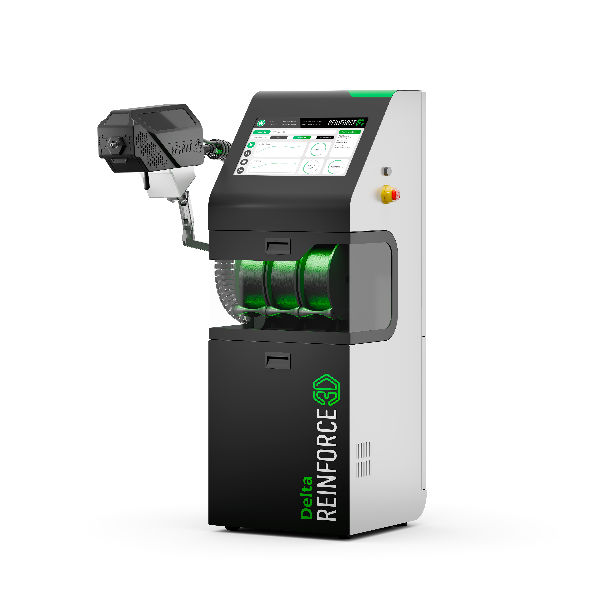
The process begins in CAD, where fiber channels are incorporated into the design. Reinforce3D's Design Checker can then be used to validate those paths before manufacturing. Once the base component has been printed or otherwise manufactured, the DELTA system performs the fiber injection process.
That complete workflow is important because adopting a new technology isn't just about what the machine itself can do. It's about understanding how design, materials, manufacturing, reinforcement, and the finished application all work together.
And that's exactly what we want manufacturers to be able to explore with our team.
See CFIP for Yourself at Impac Systems Engineering
Sometimes the easiest way to understand a new manufacturing technology is simply to see it in action.
Impac Systems Engineering has a Reinforce3D DELTA system at our Temple, Texas facility, giving manufacturers an opportunity to get a closer look at the CFIP process and talk with our team about their own applications. ISE's DELTA offering is designed around industrial internal reinforcement and integration into existing manufacturing workflows.
Whether you're working with aerospace components, UAVs, automotive parts, tooling, or another demanding application, you don't have to already know whether CFIP is the right solution.
Bring us the application. We can start there.
If you're curious about CFIP, have a part that needs more strength without unnecessary weight, or simply want to see how continuous fiber reinforcement works, we'd love to talk.
Schedule a live demonstration or contact Impac Systems Engineering to learn more about Reinforce3D CFIP technology:
https://impacsystems.com/company/contact-us/